On this page
A bin store sells general merchandise loose in large bins at one flat price per item, and that price drops on a set schedule through the week. Customers come for the restock day and come back for the bargain days. To start one, you need a space with room for bins and back stock, a budget that covers several weeks of inventory before sales cover it, and a reliable supply of high-unit-count pallets.
This guide covers the model, space, budget, which lots to buy, how to work out pallets per week, pricing, restock day and leftovers. The numbers in the examples are placeholders. Replace them with your own quotes and results.
How the bin store model works
Most bin stores run a weekly cycle. The store restocks on one day, often closing for part or all of the day before to empty and refill the bins. Opening day has the highest price and the best selection. Each day after, the price per item drops, until the last day of the cycle when everything left goes for the lowest price. Then the cycle starts again.
The falling price does two jobs. Early shoppers pay more for first pick, and late shoppers clear what's left, so less stock carries over. The weekly reset gives regulars a reason to return.
| Day | Price per item | What happens |
|---|---|---|
| Thursday | Closed | Restock: clear, sort and refill bins |
| Friday | $10 | Restock day, biggest crowd |
| Saturday | $8 | Busy weekend trade |
| Sunday | $6 | |
| Monday | $4 | |
| Tuesday | $2 | |
| Wednesday | $1 | Last day; pull leftovers at close |
Space and fixtures
- Sales floor. Bins need room on all sides for shoppers to reach in. Plan wide aisles, because restock days bring crowds.
- Back room. You need space to receive, unwrap and sort pallets, plus storage for next week's stock and pulled items. Many owners find the back room fills faster than the sales floor.
- Delivery access. A loading dock is ideal. Without one, you'll need liftgate delivery, a pallet jack and a level path from the curb to the back room. See our freight guide.
- Bins and tables. Large, sturdy, shallow-enough bins that shoppers can reach the bottom of. Add a few shelves or a glass case for higher-value items priced separately.
- Checkout. A POS or card reader that handles fast, repeated single-price sales, bags, and a clear line layout for restock day.
- Parking and signage. Restock-day traffic needs parking, and a visible sign with the price schedule saves your staff answering the same question all day.
- Local rules. Check zoning, occupancy limits, business licensing and your state's sales tax permit before you sign a lease.
Startup budget categories
Costs vary widely by city, space and how much you build out, so get real quotes. The categories below are what most bin store budgets need to cover. The figures are a worked EXAMPLE with round numbers, not typical or national costs.
| Category | Example amount | Notes |
|---|---|---|
| Lease deposit and first month | $6,000 | Ask about build-out allowances and rent-free fit-out time |
| Bins, tables and shelving | $4,000 | Buying used fixtures can cut this |
| First four weeks of inventory | $12,000 | Enough pallets to restock before sales fully fund buying |
| Freight for that inventory | $2,000 | Use real freight estimates for your ZIP |
| POS, card reader and bags | $1,000 | |
| Pallet jack, carts, cutters, safety gear | $800 | |
| Signage and opening marketing | $2,000 | Outdoor sign, social media, opening-week flyers |
| Licences, permits and insurance | $1,500 | Varies by state and city |
| Cash reserve | $10,000 | Rent, payroll and restocks while sales ramp up |
| Example total | $39,300 |
The cash reserve is the line new owners cut first and regret most. Sales usually take time to reach a steady level, and you still need to buy next week's inventory before this week's sales are counted.
Which lots work for a bin store
Bin stores run on unit count and variety. A shopper paying one price per item wants a lot to choose from, and you need enough items to fill bins every week. That points to lots with many units at a low cost per unit, across categories with broad appeal.
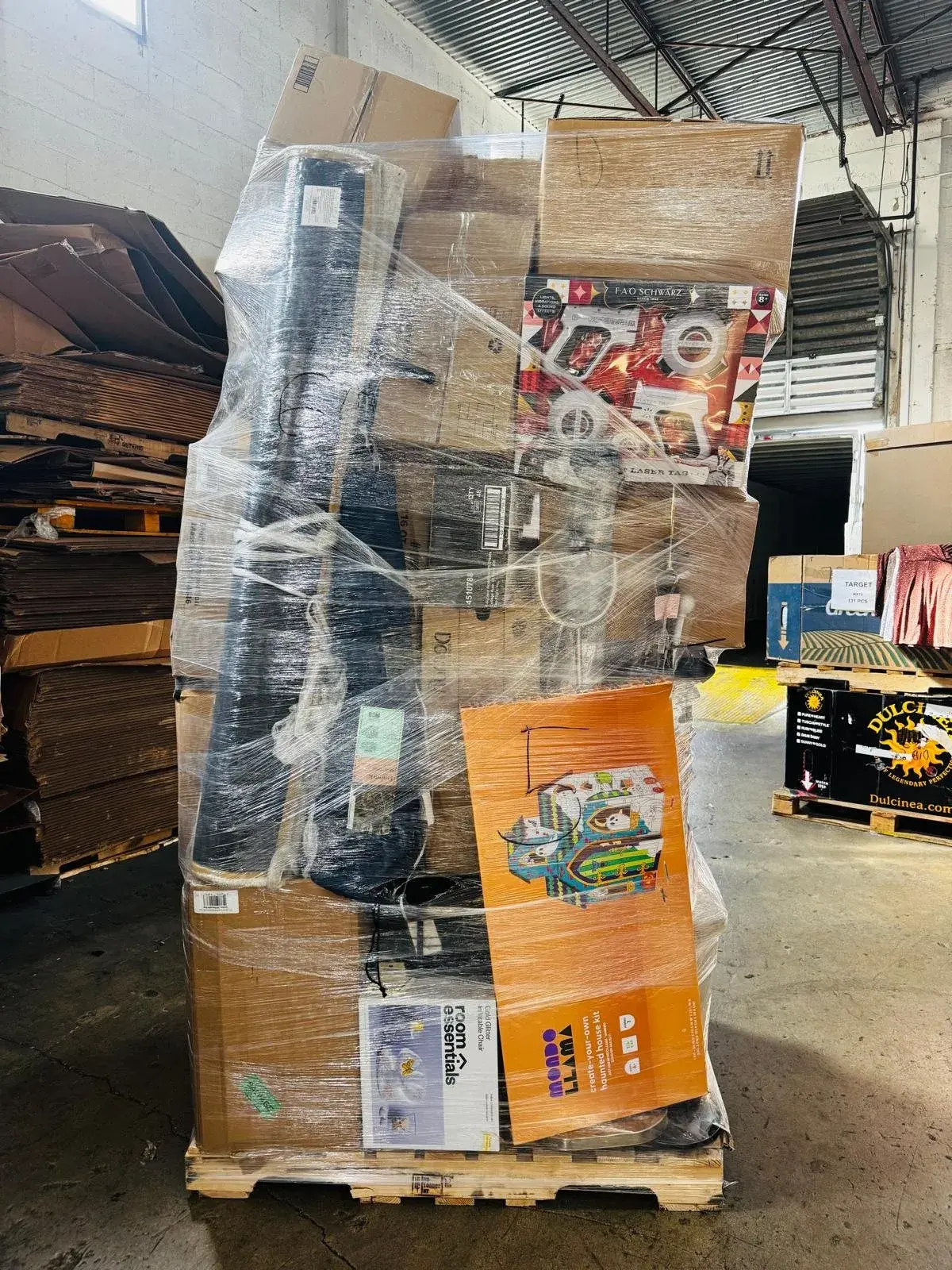
- Customer Return pallets. Untested returns sell well in bins because shoppers accept as-is condition in exchange for the price. They also give you the most units per dollar.
- Mixed Condition pallets. A blend of new, shelf-pull and returned goods adds variety, and some sealed items make good showcase pieces.
- General merchandise. Mixed general merchandise gives the widest range per pallet. Home and kitchen and toys are popular bin categories too. Browse General Merchandise, Home & Kitchen and Toys & Baby.
- High unit counts. Check Units and Price / unit in each lot's key facts. The Bin Store Starter Kit collection gathers our Customer Return and Mixed Condition lots with 150 or more units.
What to avoid: large furniture, which takes bin space and needs separate pricing, and Salvage lots unless you have a parts or repair channel. For more detail see our bin store buying guide and customer returns vs. shelf pulls.
How many pallets to buy each week
Work out pallets per week from your floor, not from a guess. You need four numbers: how many bins you have, how many items fill a bin, how much of that stock you replace each week, and the average units per pallet in the lots you buy.
Units needed per week = bins × units per full bin × weekly replacement rate ÷ share of units that go into bins.
Pallets per week = units needed per week ÷ average units per pallet.
Example (invented numbers): you have 20 bins that each hold about 150 items, so a full floor is 3,000 items. You plan to replace about 80% each week, which means 2,400 items. About 85% of what arrives is bin-worthy; the rest is broken, oversized, or pulled for a showcase shelf or online sale. So you need about 2,400 ÷ 0.85 ≈ 2,825 units arriving each week. If the lots you buy average 300 units per pallet, that's about 9.4, so plan on 9–10 pallets a week.
A full truckload is 18–26 pallets, so at that volume a truckload every two to three weeks may cost less per pallet than weekly LTL shipments, if you have space to store the extra. Recalculate every month with your real sell-through and your real units per pallet.
Pricing strategy
- Start from landed cost per unit. Add the price and freight of a week's pallets and divide by the bin-worthy units. Your average realised price across the week needs to cover that, plus rent, payroll and other costs spread across the units you sell.
- Track sales by day. Record items sold and revenue for each price day. If most stock goes in the first two days, your top price may be low. If a lot is left for the final day, the early prices may be too high or the stock mix is wrong.
- Pull high-value items out of the bins. Use the manifest to spot the most valuable lines before the pallet arrives (sort by extended retail on the lot page). Price those separately on a showcase shelf or sell them online.
- Keep the schedule simple. Shoppers should be able to read the week's prices at a glance. Change the schedule rarely, and announce changes in advance.
Restock day operations
Restock day decides the week. A routine keeps it fast and safe.
- Schedule deliveries so pallets arrive before restock day, with time to sort. Inspect and note any damage on the delivery receipt before you sign.
- Clear the bins. Pull leftovers from the last cycle to clearance, online or donation piles.
- Unwrap and sort. Separate showcase items, oversized items, broken units and bin stock. Flatten and bale cardboard as you go.
- Fill bins evenly. Spread each category across several bins so every bin has variety, and put some eye-catching items near the top.
- Take photos and post them. A few pictures of the best finds on social media brings shoppers in on opening day.
- Brief staff on crowd control, line management and the price schedule before you open.
What to do with leftovers
- Final-day pricing. The lowest price day, or a fill-a-bag deal, clears much of what's left.
- Clearance area. Move slow items to a clearance table rather than letting them fill bins week after week.
- Online resale. Items worth more than your bin price can be tested and listed online.
- Bulk resale. Other resellers, flea-market vendors and exporters may buy leftovers by the box or gaylord.
- Donate and recycle. Donate usable goods to local charities, and recycle cardboard, plastics and electronics through proper channels. Check local rules for e-waste and batteries.
Keep your sourcing consistent
Shoppers notice when the bins get thin or the mix changes. Buying the same grades and categories on a regular schedule keeps restock days predictable for you and for them.
Order the pallets you need every week at the same time each week, so restock days stay predictable. Add extra lots when the price fits your numbers. Our how to order page explains checkout, payment and delivery.
Track every lot: units received, units sold, units pulled and revenue per pallet. After a few weeks you'll know which lot types and categories earn their place in your bins. If you have a resale certificate, add it under Account to unlock Net 30 terms and tax-exempt checkout where it applies.
FAQ
It depends on your city, space and build-out. Budget for lease costs, fixtures, several weeks of inventory and freight, a POS system, equipment, licences and insurance, marketing, and a cash reserve. Get local quotes for each category rather than relying on a national figure.
Multiply your bins by the items per full bin and your weekly replacement rate, adjust for items that won't go in bins, then divide by the average units per pallet in the lots you buy. The result is your weekly pallet count.
High-unit-count Customer Return and Mixed Condition pallets in broad-appeal categories such as general merchandise, home and kitchen, and toys. Palle Liquidation-US's Bin Store Starter Kit collection lists lots like these with 150 or more units.
Most use one price per item that falls on a set schedule through the week, starting highest on restock day and ending at the lowest price on the final day. Higher-value items are often pulled and priced separately.
Clear them on the final low-price day, move slow items to a clearance area, sell better items online, sell leftovers in bulk to other resellers, and donate or recycle the rest.
Editorial Team · Marketplace team
Our buyer-success and marketplace teams write about what they see across thousands of lots every month.