On this page
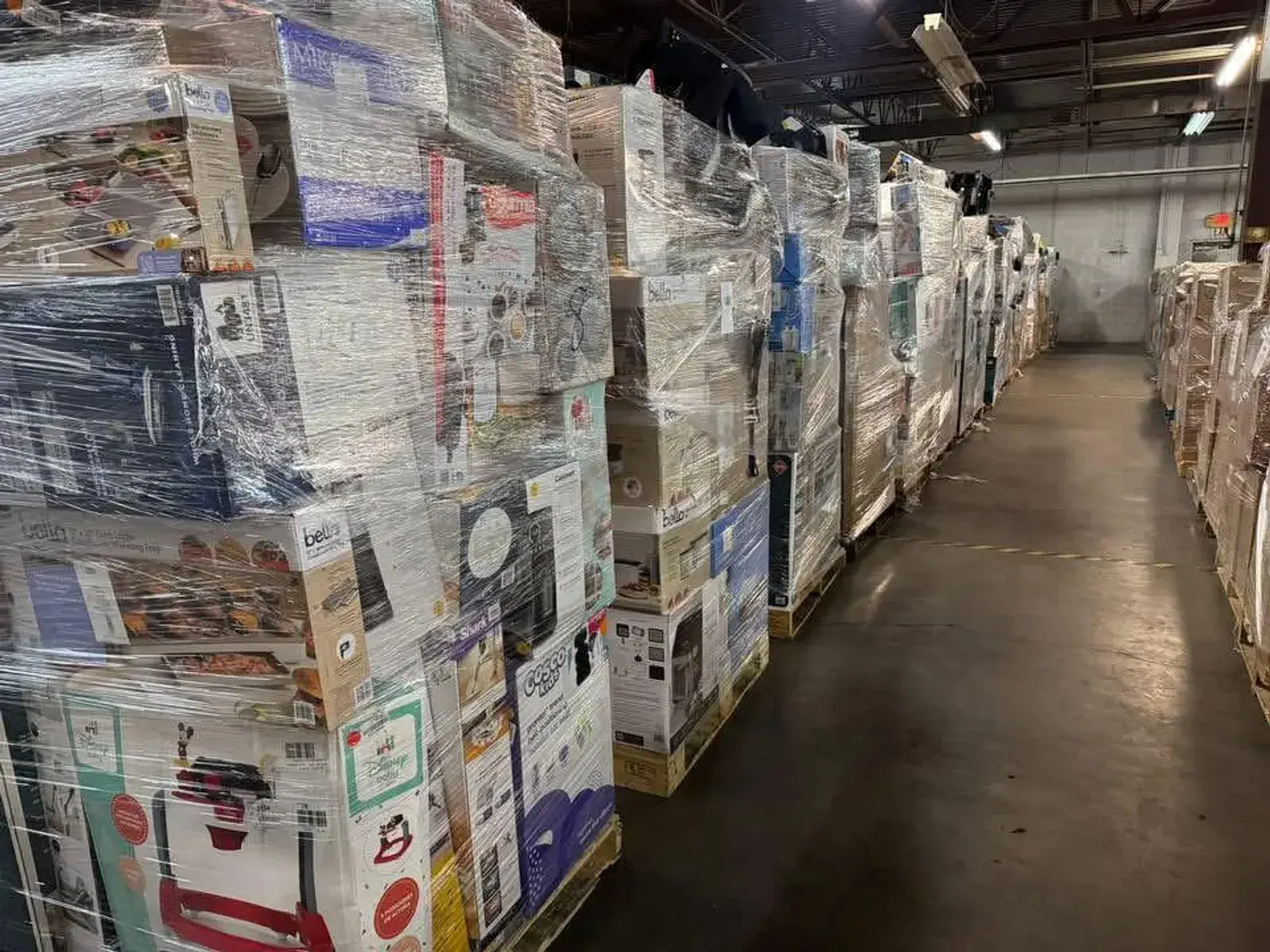
Most liquidation pallets ship by LTL (less-than-truckload) freight, where your pallets share a trailer with other shippers' freight. The cost depends on weight, how many pallets you order and how much space they take, the distance, the freight class, and extra services such as a liftgate or residential delivery. Case packs usually go by parcel. Full truckloads get their own trailer.
Freight can change whether a lot makes money, so price it before you order. This guide explains what goes into the quote, what you need on delivery day, and how to cut freight cost per unit.
Parcel, LTL or full truckload?
The shipping mode follows the lot size. On Palle Liquidation-US each lot page tells you which mode applies.
- Parcel, for case packs. Sealed cartons travel by parcel carrier like any online order. No dock or equipment needed, and home delivery is simple. Case packs are the easiest way to start.
- LTL, for one or a few pallets. Your pallets ride on a shared trailer and move through the carrier's terminals. It's the standard for single pallets and small multi-pallet orders. Each of our pallets is a standard 48×40 in. footprint; the lot page shows the approximate weight per pallet.
- Full truckload, for truckload lots. A dedicated 53 ft trailer carries 18–26 pallets from our dock to yours without stops at terminals. It requires a loading dock and a forklift at delivery. See truckloads.
What drives LTL freight cost
An LTL quote is a base linehaul rate plus fees for any extra services. These factors set the base rate.
- Weight. LTL is priced largely per hundred pounds, so heavier shipments cost more, though the rate per pound often falls as weight rises.
- Pallet count and dimensions. Carriers price the space you take on the trailer. Two pallets cost more than one; a tall or oversize pallet can cost more than its weight suggests.
- Distance and lanes. Longer distances cost more. Some lanes are cheaper than others because carriers have more freight moving that way.
- Freight class. See the next section.
- Accessorials. Extra services such as liftgate, residential delivery or delivery appointments. These are added on top of the base rate.
- Market conditions. Fuel surcharges and seasonal demand move rates up and down during the year.
Freight class basics
In the US, LTL freight is classified under the National Motor Freight Classification (NMFC), with classes from 50 to 500. Lower classes are dense, durable freight that's easy to handle, and they cost less per pound. Higher classes are light for their size, fragile or awkward, and they cost more.
Density, meaning pounds per cubic foot, is the biggest factor for most mixed merchandise. A pallet of dense kitchen goods usually ships in a lower class than a pallet of the same size stacked with pillows. You don't need to classify freight yourself when you buy from us, because we set it up with the carrier. It helps to know why a light, bulky lot can cost more to ship per dollar of retail than a heavy, compact one.
Dock, liftgate or residential delivery
How the pallets come off the truck matters as much as how far they travel.
- Dock delivery. If you have a loading dock at trailer height, the driver rolls pallets straight into your building. It's the simplest and cheapest option, and the only one for full truckloads.
- Liftgate delivery. With no dock, the carrier sends a truck with a hydraulic lift that lowers each pallet to the ground. Liftgate is an added fee. Once the pallet is on the ground, moving it is up to you.
- Residential delivery. Homes, and often farms and some home-based businesses, count as residential. Carriers add a surcharge, may need an appointment, and may use a smaller truck. Tell us at checkout so the quote is accurate.
- Limited-access sites. Storage units, construction sites, schools and similar locations can carry extra fees or restrictions. Check with us before you choose one as your delivery address.
What you need to unload
- A pallet jack for any pallet delivery by liftgate. Drivers typically bring the pallet to the liftgate and lower it, then leave it at the curb or end of the driveway.
- A firm, level surface. Pallet jacks struggle on gravel, grass and steep driveways. Plan where the pallet will land and how you'll move it.
- A forklift and dock for full truckloads, and usually a delivery appointment.
- Help. A loaded pallet can weigh several hundred pounds or more. Have a second person and a plan to break the pallet down if you can't move it whole.
- Space. Know where the pallets will go before the truck arrives, and keep the path clear.
Receiving checklist: inspect before you sign
The delivery receipt, usually the bill of lading (BOL), is your evidence if anything went wrong in transit. Once you sign it clean, a damage claim gets much harder. Before the driver leaves:
- Count the pallets and check them against the BOL and your order.
- Walk around every pallet. Look for torn or re-wrapped stretch wrap, crushed corners, leaning or shifted stacks, forklift punctures and wet cartons.
- Write any problem on the BOL before you sign, in specific words: “1 pallet wrap torn, top cartons crushed” is far stronger than “damaged”.
- If a pallet is missing, write the short count on the BOL too.
- Take photos of each pallet, all four sides and the top, before you unwrap anything.
- Keep your copy of the signed BOL with your order records.
See also our help article on receiving a shipment.
Freight damage claims basics
Visible damage should be noted on the BOL at delivery. Concealed damage, found only when you unwrap, should be photographed and reported as soon as you find it. Keep the packaging and the damaged goods until the claim is settled; a carrier may want to inspect them.
Transit damage is claimed with the carrier, which is why the notes on the delivery receipt matter. Contact us within 15 days of delivery with your order number, photos and the freight paperwork, and we'll tell you the next steps. See our Return & Refund Policy. Report problems quickly; the sooner we hear, the easier it is to take up with the carrier.
How Palle Liquidation-US shows freight before you buy
Every lot page has an Estimate shipping box. Enter your delivery ZIP, tick Loading dock if you have one (otherwise the estimate includes liftgate delivery), and tick Residential if it applies. The estimate shows the shipping mode, the freight amount, any liftgate or residential fees, and an approximate transit time.
At checkout, freight is calculated again for your whole cart using the same ZIP and delivery options. Everything we sell ships from our own warehouse, so all the lots in one order travel together as one shipment. Final freight is confirmed at checkout.
Want to collect instead? Use "Warehouse pickup · book a visit" on any lot page to book a weekday visit at our Columbus-area warehouse. Bring a truck or trailer sized for your pallets.
How to lower freight cost per unit
- Put more on each shipment. Much of an LTL bill is fixed per shipment: pickup, delivery and any liftgate or residential fees. Two or three pallets in one order usually cost less per pallet than the same pallets shipped separately.
- Combine lots in one order. Because everything ships from one warehouse, lots in the same cart ship together as one shipment. Add them before you check out rather than placing separate orders.
- Use a dock or a commercial address. Dock delivery avoids the liftgate fee, and a business address avoids the residential surcharge.
- Favour dense, high-unit lots. Freight follows weight and space, so a lot with more sellable units per pallet spreads the cost further. Check the units and weight in the lot's key facts.
- Move up to a truckload when volume allows. Once you're buying many pallets at a time, a full truckload can cost less per pallet than several LTL shipments.
- Be ready on delivery day. Missed appointments and redeliveries add fees. Answer the carrier's call and keep your unloading area clear.
Build freight into your math
Freight belongs in your cost before you order. Add the estimate to the price, then divide by the units you expect to sell. That landed cost per unit is the number to compare against your resale research. Our manifest guide has a worked example.
FAQ
It depends on weight, pallet count, distance, freight class and delivery services such as liftgate or residential delivery. On Palle Liquidation-US, enter your ZIP on any lot page to see an estimate; freight is confirmed at checkout.
No. Without a dock, choose liftgate delivery and the carrier lowers the pallet to the ground. You'll need a pallet jack and a firm, level surface to move it. Full truckloads do require a dock and a forklift.
Yes, by liftgate truck, with a residential surcharge and often an appointment. Tick Residential in the estimator or at checkout so your quote includes it.
Note the damage on the delivery receipt before you sign, take photos, and contact us within 15 days of delivery with your order number and the freight paperwork. Transit damage is claimed with the carrier, as set out in our Return & Refund Policy.
Yes, by appointment. Book a warehouse visit from any lot page: pick a weekday (Monday to Friday) and a 50-minute time at least 45 hours ahead. Orders of $600 or more pay a refundable 35% deposit to confirm; smaller orders pay in full. There's no walk-in store.
Logistics Team · Freight & fulfilment
Our logistics specialists help buyers move pallets and truckloads across the country.