On this page
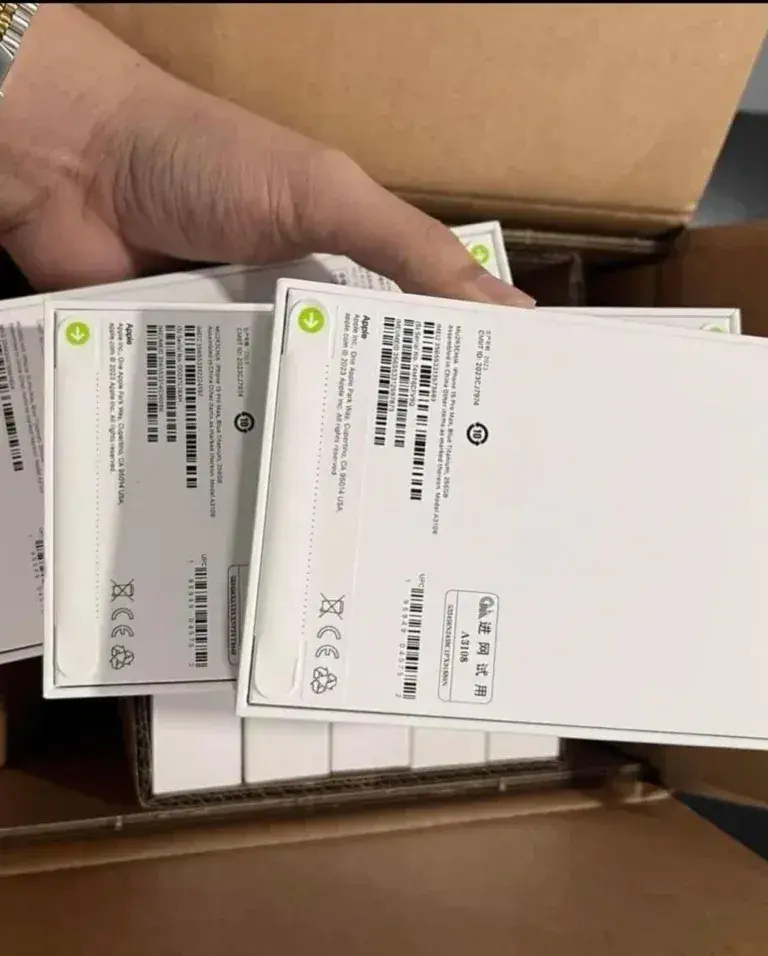
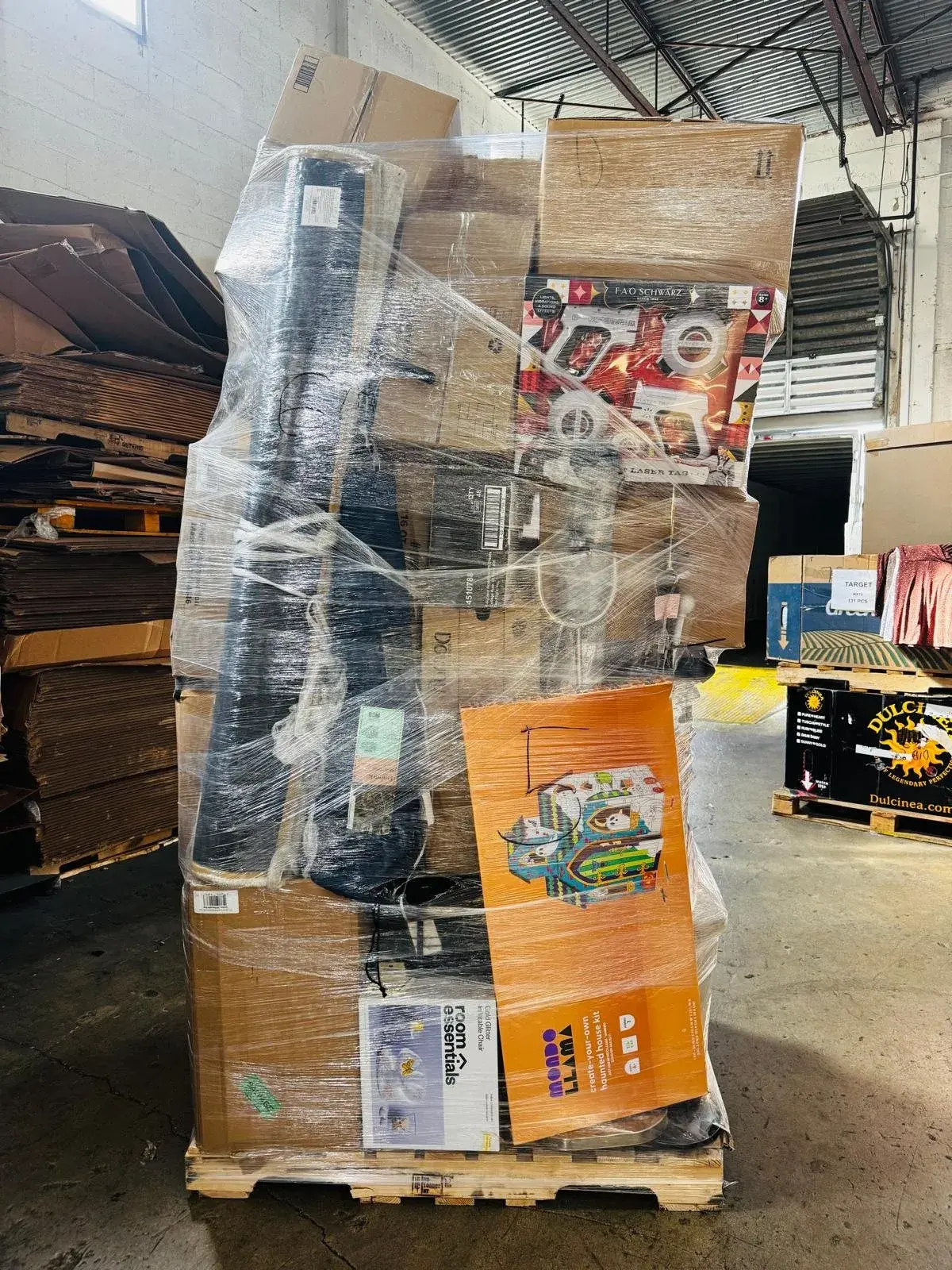
Customer return pallets hold goods that shoppers bought and sent back. They're untested, so you'll get a mix of working, cosmetic and defective units. Shelf pull pallets hold goods that never sold: they were pulled from store shelves and may have price stickers or light box wear, but they haven't been used. Returns cost less relative to retail. Shelf pulls cost more and need far less testing.
Which is better depends on how you sell and how much time you can spend per unit. This guide covers all five Palle Liquidation-US condition grades, what's typically inside each, and how to match a grade to your channel.
Why condition grade matters more than price
Two lots with the same retail value and the same price can have very different outcomes. One might be ready to list the day it arrives. The other might need every unit opened, tested, cleaned and photographed, with a share set aside as parts. The grade tells you which kind of lot you're buying before you see it.
Across our lots, typical prices run from about 10% to 35% of retail. Where a lot sits in that range depends mostly on grade and category. New / Overstock and Shelf Pull lots sit toward the top, Customer Return and Mixed Condition lots lower, and Salvage lowest. The discount on the lower grades pays you for the extra work and risk you take on.
The five Palle Liquidation-US condition grades
These are the grades we use on every lot, with the definition shown on the lot page. Full definitions are also in the help centre under condition grades.
New / Overstock
Definition: unopened retail overstock in original packaging.
This is stock a retailer or manufacturer ordered but didn't sell through: excess seasonal buys, discontinued colours, packaging changes. Boxes are sealed. Testing is usually unnecessary beyond a spot check, and you can list with stock photos and describe items as new where your marketplace's rules allow it.
It's the highest-priced grade relative to retail. Your margin comes from selling at or near new-item prices on your channel, so price research on current sold listings matters more than defect rates. Browse Brand-New Overstock.
Shelf Pull
Definition: pulled from store shelves; may have price stickers or light box wear.
Shelf pulls come off the sales floor when a store resets a section, clears a season or makes room for new stock. The products are unused. The packaging is where the wear shows: price or clearance stickers, scuffed corners, dented boxes, sometimes an opened display unit.
Testing effort is low. Plan time to remove stickers and to check any box that looks opened. Some buyers sell shelf pulls as new in open or damaged packaging, depending on the item and the marketplace. Pricing sits just below New / Overstock. For tech in these two grades, see Flip-Ready Electronics.
Customer Return
Definition: returned by shoppers. Untested; expect a mix of working, cosmetic and defective.
Shoppers return things for all sorts of reasons: wrong size, changed mind, gift duplicates, missing parts, damage in shipping, or a real fault. Returns pallets reflect that. Some units are like new, some have cosmetic marks or missing accessories, and some don't work. Packaging ranges from sealed to opened, retaped or missing.
Testing effort is the highest of the sellable grades. Every unit you plan to sell individually should be checked for function and completeness. You also need somewhere to send what fails: parts sales, repair, bulk resale, recycling. In exchange, customer return pallets are priced well below new and shelf-pull stock, so you get more units per dollar. Individual defective units are part of what the grade describes, so on their own they aren't grounds for a refund under our Return & Refund Policy.
Mixed Condition
Definition: a blend of new, shelf-pull and returned goods.
Mixed lots come from loads where grades were combined, such as a store clearance or a returns stream with some unsold stock mixed in. Expect variety in both products and packaging. Treat it like a returns lot for testing: check anything opened, and assume sealed units are fine unless the box is damaged.
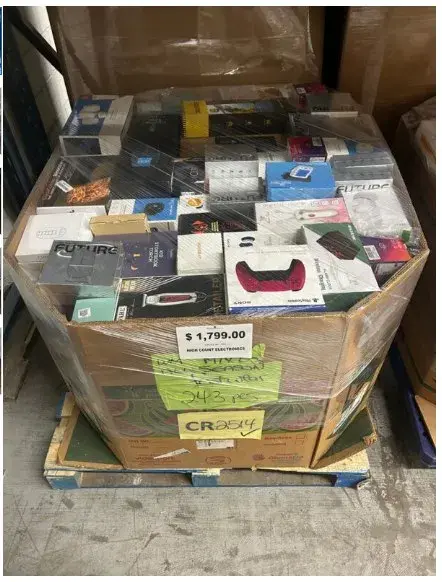
Pricing depends on the blend, and usually sits with or near Customer Return lots. Mixed and returns lots with high unit counts make up our Bin Store Starter Kit collection.
Salvage
Definition: damaged or for parts. Sold as-is for repair and resale professionals.
Salvage lots include items with known damage, failed tests or missing components. Some can be repaired and resold, and some are worth more as parts. Packaging is often missing or heavily damaged.
It's the lowest-priced grade by a wide margin, and the one that needs the most skill. Buy salvage if you repair, refurbish or sell parts and have a plan for scrap and recycling. If you don't, the low price won't make up for the time. See Repair & Refurb and our guide for refurbishers.
Comparison table
| Grade | Packaging | Testing effort | Price vs. other grades | Typical buyer fit |
|---|---|---|---|---|
| New / Overstock | Sealed, original packaging | Minimal; spot checks | Highest | Online resellers, discount stores |
| Shelf Pull | Original, may have stickers or light box wear | Low; check opened boxes | High | Online resellers, discount stores, flea-market vendors |
| Customer Return | Anywhere from sealed to opened or missing | High; test every unit you sell individually | Low | Bin stores, flea-market vendors, refurbishers |
| Mixed Condition | Varies by unit | Moderate to high | Low, depends on the blend | Bin stores, flea-market vendors |
| Salvage | Often missing or damaged | Highest; repair or part out | Lowest | Repair shops, parts resellers |
How to choose for your sales channel
- Online marketplace sellers. Every defective unit you ship costs a return, a refund and possibly a bad review. New / Overstock and Shelf Pull lots usually work out cheaper per sale once you count those costs. If you buy returns, test before listing and describe condition honestly. See sourcing for online resale.
- Bin stores. Customers buy on price and variety and accept that items are as-is. Customer Return and Mixed Condition pallets with high unit counts give you the most items per dollar. Pull the best units for a showcase shelf or online listing. See how to start a bin store.
- Flea-market vendors. You can test items at your table and explain condition face to face, which suits returns and mixed lots. Shelf pulls work well for gift-type items that sell better in a box.
- Discount and dollar stores. Shoppers expect new product. New / Overstock and Shelf Pull stock fits the shelf with little work. See running a discount store.
- Refurbishers and repair shops. Your skills turn lower grades into sellable stock. Customer Return and Salvage lots in categories you know are where your margin is.
A quick way to compare grades on cost
The cheaper grade isn't always the cheaper buy. To compare, work out your cost per sellable unit for each option.
Take the landed cost (price plus freight) and divide by the units you expect to sell. Then add your handling cost per unit: minutes to test, clean and list, times your hourly labour cost. Compare the totals. If a returns lot saves you less per unit than it costs you in extra handling, the higher grade is the better buy.
Your expected sell-through for each grade should come from your own records. Track every lot you buy: units received, units sold, units scrapped and hours spent. After a few lots you'll know your real numbers for each grade and category. Our manifest guide walks through the rest of the math.
Checking a lot's grade before you buy
- Read the grade and definition on the lot page, under Condition.
- Read the lot description for anything specific to that load, such as the source or known issues.
- Check the manifest. For returns, look at which lines carry the value; a few high-value items raise the stakes on their condition.
- Check the Source field in the lot's key facts.
- Ask. If you're unsure whether a grade fits your plans, contact us before you order.
FAQ
Shelf pulls were removed from store shelves without being sold, so they're unused but may have stickers or box wear. Customer returns were bought and returned by shoppers, and they're untested, so you'll find a mix of working, cosmetic and defective units.
They can be if your channel handles mixed quality, such as a bin store, flea-market table or repair shop, and you've priced in testing time and a share of units you can't sell. They're harder to make work if you sell online item by item without testing capacity.
Individual defective units aren't grounds for a refund, because the grade tells you to expect them. If the order doesn't match its written listing in a material way, you can request a return within 15 days of pickup or delivery under our Return & Refund Policy.
Shelf pulls are unused, but packaging may show stickers or wear. How you can describe them depends on the item and on each marketplace's condition rules, so check those rules before listing.
Start with the grade your channel can sell with the least extra work, and a lot size you can afford to learn from. For many first-time online sellers that's shelf pulls; for bin stores it's customer returns or mixed lots.
Editorial Team · Marketplace team
Our buyer-success and marketplace teams write about what they see across thousands of lots every month.